Which climate zone is my block in?
Australia builds in eight climate zones. Here is what each one asks of a house, which towns HWD already knows, and what the Studio does the moment it hears where you are.
The National Construction Code divides Australia into eight climate zones, and they are a better way to think about a house than the state it is in. Brisbane and Mount Isa are in the same state and in different climates. Cairns and Darwin are in different states and the same one.
HWD works in five characters, because that is how many different houses the eight zones ask for.
Tropical: zone 1
Darwin, Cairns, Townsville, Broome. A hot humid summer and a warm winter. The house has to move air: rooms one deep so a breeze crosses them, a deep verandah on the living side, wide openings, and a breezeway or a court where the plan allows. Keep the west wall small. Most of this zone is cyclone country too, and the Studio hips the roof and keeps the eaves tight the moment it hears a cyclonic town, even over a roof that came with a look, unless you pick a different roof yourself.
Subtropical: zone 2
Brisbane, the Gold Coast, the Sunshine Coast, Coffs Harbour. A warm humid summer and a mild winter. Open the house to the north and the breeze, put a covered outdoor room off the kitchen, and make the eaves deep enough for a summer sun. Winter asks for little.
Hot dry: zones 3 and 4
Alice Springs, Mildura, Kalgoorlie, Dubbo, Tamworth. A hot dry summer, and a warm winter in zone 3 or a cool one in zone 4. A hot summer and a cool night want a sheltered courtyard rather than an open deck, small openings to the west, and living rooms that face north for the winter sun. Thick walls that hold the night's cool earn their keep here.
Temperate: zones 5 and 6
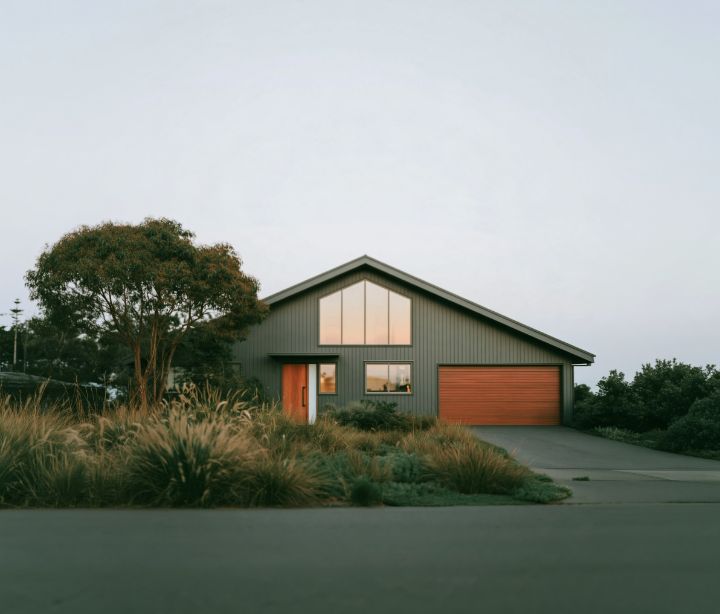
Sydney, Perth, Adelaide, Melbourne, Newcastle, Geelong. Warm temperate in zone 5, mild temperate in zone 6. Living to the north for winter sun, eaves to keep the summer sun off it, and a covered outdoor room off the kitchen. This is the zone most Australian houses are in, and the one where a house that faces the wrong way costs the most to run.
Cool and alpine: zones 7 and 8
Canberra, Hobart, Ballarat, Orange, Armidale, and the High Country in zone 8. A cold winter. A compact plan that holds its heat: living to the north, an entry that does not open straight into the living room, a smaller outdoor room, and glass where the sun reaches. In zone 8 the roof also has to carry snow.
How to find yours
Tell the Studio your suburb or your postcode when it asks where you are building. It knows the zone of the towns people name most, and it takes a state's usual zone for the rest, and says so, because a zone read from a state rather than a named town is a guess. The zone boundaries follow lines on a map, not postcodes, so for the block itself the last word is your council or the map in the code. The Studio prints its reading on the plan as a note, never as a compliance statement.
What it changes on the plan
The moment the Studio knows where a home is, it changes what it draws: which side the living room is on, how deep the eaves are, whether there is a deck or a courtyard, whether the roof is hipped for wind, and which questions it asks you next. A wet season and a deep verandah in Cairns, winter sun and a fire in Hobart. That is why it asks where first, before it asks anything else.